
Supply Chain Management of the Future: When Robots Smile – and People Make the Difference
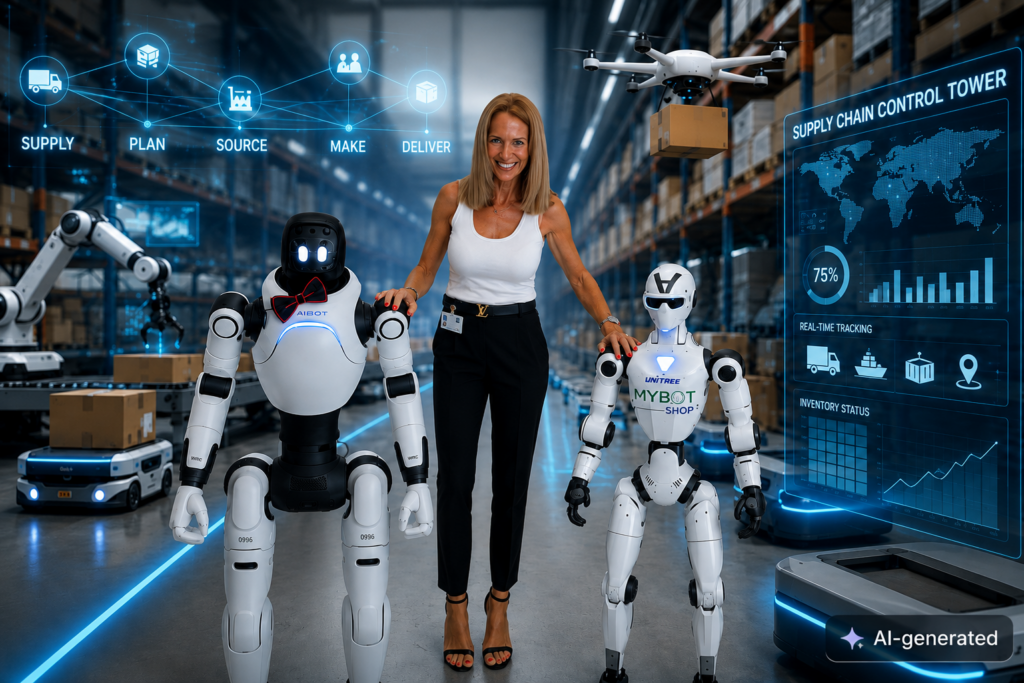
Standing there amidst humanoid robots, autonomous vehicles and AI-powered assistance systems, I couldn’t help but smile. It was certainly impressive – and at the same time, a question came to mind that we, as a management consultancy specialising in supply chain optimisation at Abels & Kemmner, grapple with every day: what will the supply chain management of the future actually look like?
Much of what sounded like science fiction just a few years ago is already a reality today. Robotics and artificial intelligence are developing at an impressive pace and are already transforming numerous processes throughout the entire supply chain. The more complex supply chains become, the more important it is to use data intelligently, recognise interrelationships and be able to assess different scenarios quickly. Modern technologies create transparency, provide a sound basis for decision-making and open up new opportunities for companies to make their supply chains more efficient, resilient and cost-effective – whether in inventory optimisation, production planning, forecast optimisation or S&OP.
Of course, I couldn’t resist taking a souvenir photo with my ‘metal colleagues’. It was fascinating to glimpse this possible future. At the same time, it struck me once again what will continue to matter in the future, despite all the technological advances: AI can now calculate many things much faster than we humans can. What it cannot replace, however, is responsibility.
This is exactly what we see in our day-to-day consultancy work. Modern software, artificial intelligence and data-driven analytics provide a valuable basis for decision-making. However, it is people who make the decisive difference: they interpret the results, take responsibility and make the right decisions, even in complex situations. At Abels & Kemmner, this is precisely what we mean by successful supply chain optimisation.
Perhaps in a few years’ time, we will indeed be working alongside robots as a matter of course. Perhaps they will even be sitting with us in meetings. However, the future of supply chain management does not hinge on a choice between humans and machines. It lies in the areas where both can combine their respective strengths.