
Specific analysis:
Data-based & data-driven
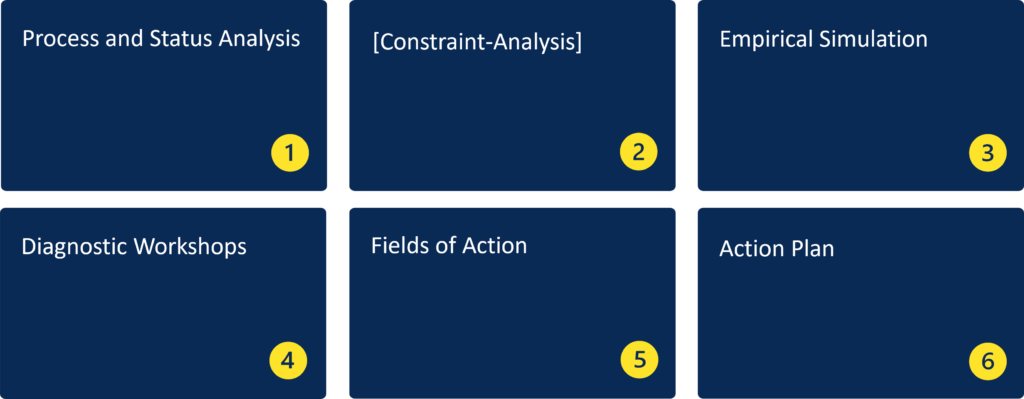
Our situation analysis methodology is specifically designed to optimize the overall concept of your supply chain. We start with a thorough process and status analysis to ensure that your processes are recorded precisely. At the same time, we transfer master and transaction data from your ERP system and, if necessary other sources, and verify and cleanse the data. This data forms the basis for analyses and simulations of improvement approaches in the digital twin. In complex cases, we also develop detailed cause-and-effect networks as part of a constraint analysis in order to uncover potential for improvement from a second perspective. All findings are incorporated into the definition of fields of action and the detailed specification of improvement measures.

Empirical simulation
in the digital twin
The core competence of our approach is empirical simulation: we use the data from your ERP system to create a digital twin of your supply chain network. In this safe, virtual environment, we run “what if” scenarios to simulate potential changes and their effects without disrupting the operational system. These simulations are a powerful tool for identifying optimisation potential.
Diagnosis & development of measures
Through diagnostic workshops, we work with your team to identify quick wins and derive specific areas for action. The result is a tailor-made action plan that not only identifies optimisation approaches, but also includes a detailed cost estimate and a realistic implementation plan. The entire process is designed to be completed within a timeframe of 4-6 months so that you can benefit from the improvements quickly and effectively.
FAQ – Frequently Asked Questions
What is a situation analysis in supply chain management?
A situation analysis examines the current state of your supply chain using processes, data and performance indicators. It identifies weaknesses and opportunities for economically worthwhile improvements. Abels & Kemmner combines process analysis with ERP data and simulation to define specific areas for improvement and develop a practical action plan.
What data is needed for a supply chain situation analysis?
The analysis uses master and transaction data from your ERP system, including information on products, demand, inventory, orders and lead times. Additional data sources may be included depending on the scope. We check the data for completeness and plausibility and correct relevant errors before using it for analysis and simulation.
What role does a digital twin play in situation analysis?
A digital twin models relevant supply chain structures and planning processes using your company’s data. What-if scenarios allow alternative settings and measures to be compared without changing ongoing operations. This helps assess their potential effects on inventory, product availability and processes before implementation.
When is situation analysis complemented by constraint analysis?
When relationships are complex, an additional constraint analysis can help explain the underlying causes of observed problems. It maps cause-and-effect relationships and identifies factors that limit overall supply chain performance. This additional perspective complements data analysis and simulation and helps prioritize effective improvement measures.
What results does a supply chain situation analysis deliver?
The result is an action plan tailored to your company, with specific areas for improvement, cost estimates and a realistic implementation schedule. We assess the findings together with your teams in diagnostic workshops. This helps distinguish quick wins that can be achieved in the short term from broader supply chain optimization measures.
How long does a supply chain situation analysis take?
A comprehensive situation analysis is generally planned over four to six months. The actual effort depends on the scope, data quality and complexity of your supply chain. Potential quick wins are identified during the analysis and, where conditions allow, can be implemented before the overall project is completed.