
Supply Chain Resilience
Supply chain resilience describes a supply chain’s ability to identify disruptions – such as those caused by supplier failures, geopolitical crises or sudden demand shocks – at an early stage, to mitigate them and to recover from them quickly, without permanently jeopardising its ability to deliver. For modern supply chain management, it is therefore no longer a niche topic, but a central component of any future-proof supply chain optimisation.
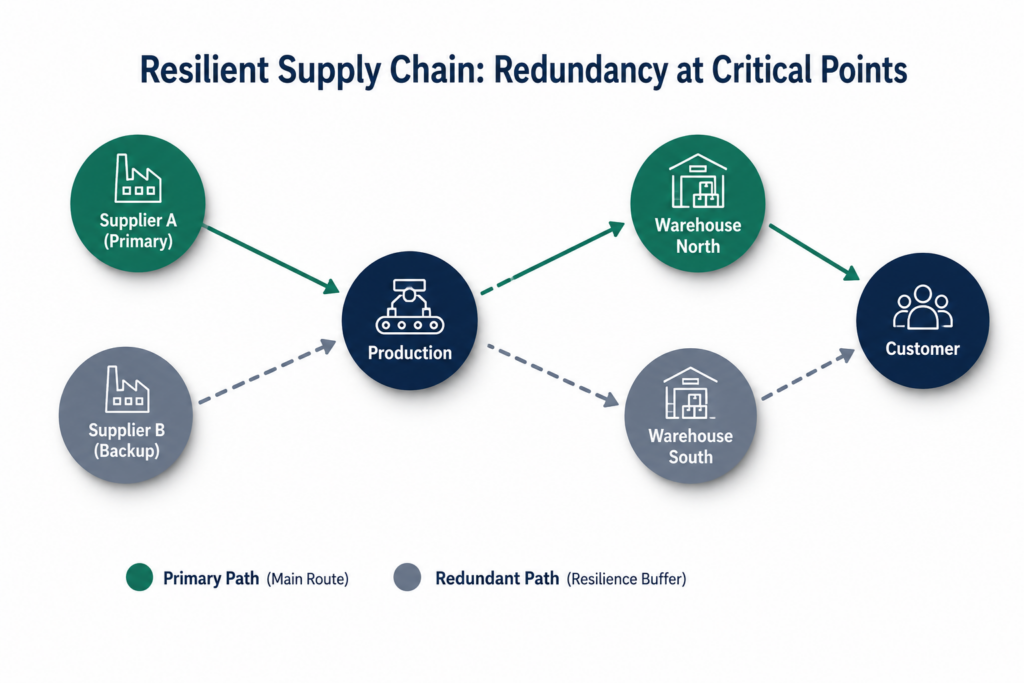
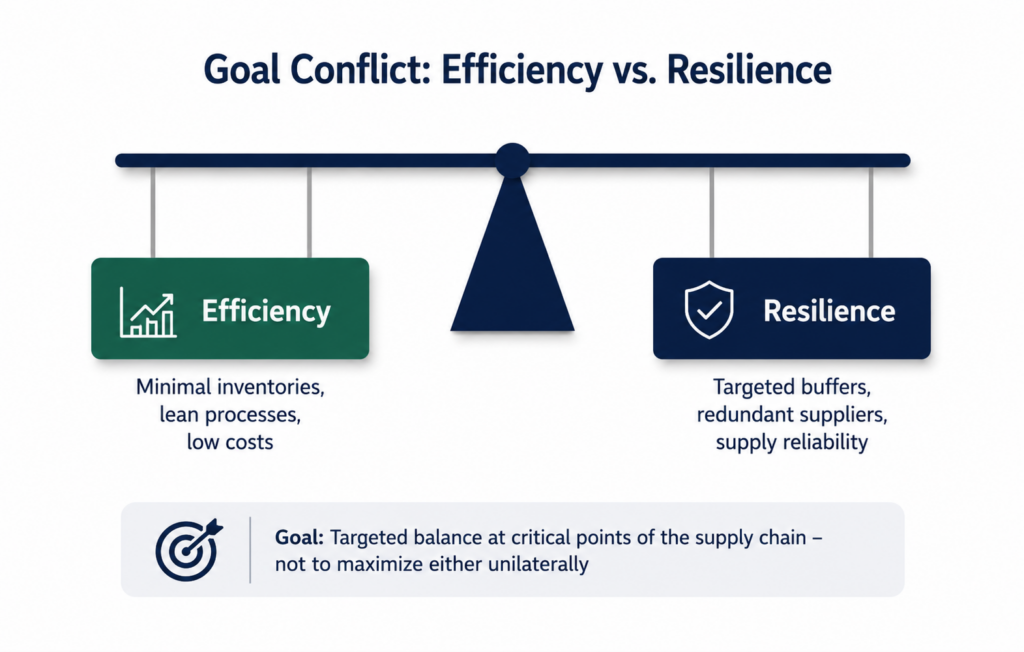
Unlike pure efficiency optimisation, which aims for minimal costs and lean stock levels, resilience in supply chain management deliberately accepts certain buffers: redundant suppliers, strategically placed safety stock at critical points, or flexible capacity. The key here is not ‘as much buffer as possible’, but targeted redundancy at those points in the supply chain where disruptions would cause the greatest economic damage.
Why is this relevant?
Supply chains are increasingly exposed to external risks – ranging from raw material shortages and geopolitical tensions to extreme weather events. Companies that focus their supply chain management solely on cost efficiency quickly find themselves unable to deliver when disruptions occur. Resilience measures as part of a well-thought-out supply chain optimisation strategy provide the necessary flexibility to remain capable of delivering and operating effectively, even in crisis situations.
Our tip:
Resilience cannot be purchased across the board for the entire supply chain – it must be assessed on a product- and supplier-specific basis. A combination of risk analysis (which suppliers and products are critical to delivery capability?) and targeted inventory differentiation creates genuine resilience without increasing overall working capital across the board.