
Frozen Zone
In production and materials planning, the ‘frozen zone’ refers to a period during which planned orders may no longer be altered.
Within this zone, quantities, dates and, in most cases, sequences are fixed. Changes resulting from automatic planning runs or manual interventions are deliberately restricted or completely prevented.
The Frozen Zone is typically located at the start of the planning horizon and usually covers a period based on the actual responsiveness of the supply chain – such as the procurement time for critical materials or the lead time in production.
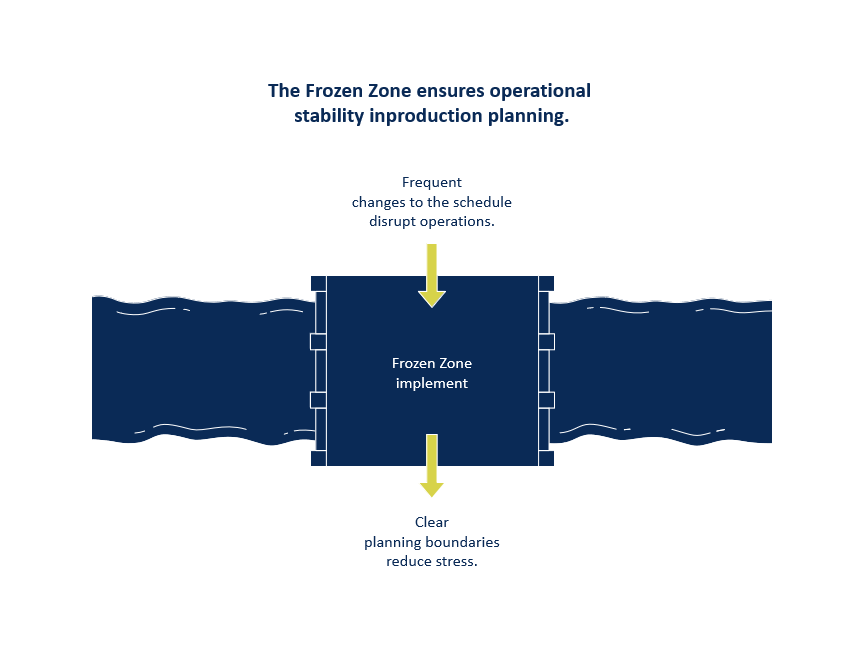
The aim is to ensure planning stability in day-to-day operations. Without clear planning boundaries, frequent plan changes lead to operational disruption:
– Production plans are constantly being rearranged
– Materials are reallocated at short notice
– Set-up sequences are disrupted
– Additional costs arise from rush orders or special transport
The Frozen Zone is a simple yet effective tool for bringing stability to operational planning and protecting the operational implementation of the plan from constant interference. Used correctly, it reduces operational chaos – without jeopardising the necessary flexibility of the supply chain.
Our tip:
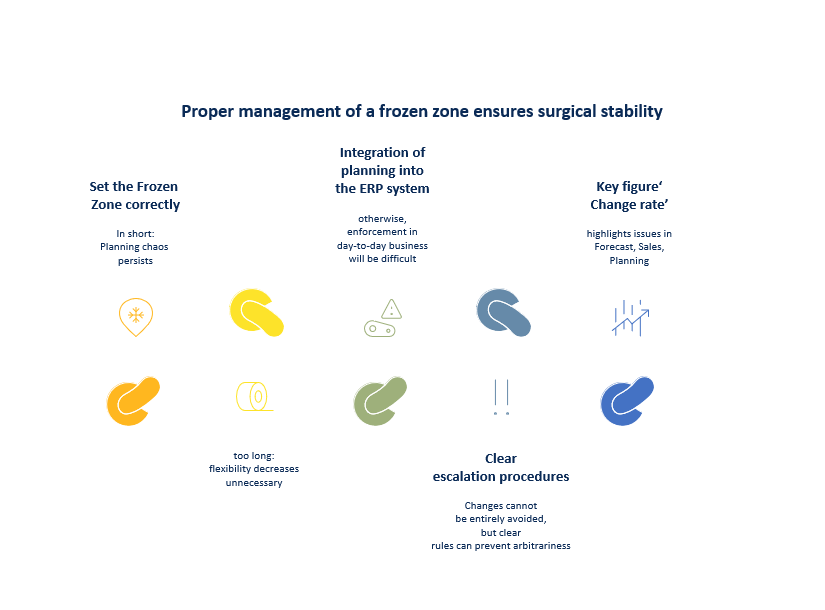
The frozen zone should be based on actual lead times and the competitive landscape regarding delivery times.
If the frozen zone is too short, planning chaos will persist. If it is too long, flexibility is unnecessarily reduced, and a frozen zone that is longer than the promised delivery time will inevitably lead to conflicts.
A frozen zone should not only apply in name but also be consistently implemented in planning. ERP or APS systems usually offer functions for locking orders or planning periods. You should make consistent use of these options. If you do not, enforcing a frozen zone within the company becomes particularly difficult.
Of course, changes can never be completely avoided in practice. Clear escalation rules should therefore be established to determine who is authorised to approve changes within the frozen zone.
A high change rate within the frozen zone is often an indication of problems in forecasting, sales or planning. It therefore makes sense to track a key performance indicator for the change rate within the frozen zone and to record the cause of all changes.